James Cameron’s Avatar: Fire and Ash is simply a cinematic spectacle.
With Avatar: Fire and Ash, Cameron delivers a film that feels both massive in scale and intimate in its emotional pull. The third chapter in the Avatar saga isn’t just a revisit to Pandora. It’s a deeper look at a world that’s become harsher, more volatile, and more reflective of the consequences left behind by earlier conflicts.
Despite its beauty, Pandora is tainted. It’s already become a battleground in the previous movie and is on the brink of another war, which seems to only concern Jake Sully (Sam Worthington).
Set some time after the events from the last film, Jake and his family still live with the Metkayinas, the sea-dwelling Na’vi clan, on the reefs of the Eastern Sea.
Still reeling from the death of their eldest son, Neytiri (Zoe Saldana) is reclusive, mourning the old-fashioned way while Jake keeps himself busy by retrieving guns from the sunken vessel. Meanwhile, Lo’ak (Britain Dalton), who feels massively guilty for the tragedy, spends his time connecting with the underwater Spirit Tree to spend time with his brother’s spirit.
Spider (Jack Champion), the lone human in Pandora, has become a problem for the Sullys when his batteries start to die down. After a brush with death, Jake decided to send Spider away to safety.
When the Tlalim Clan (or Windtraders) arrive, Jake made arrangements to have Spider come aboard. Naturally, the children oppose while Neytiri could care less. But the family never made it to safety because they were attacked by the Mangkwan Clan (or Ash People).
This attack sets off a series of events that took each character on a journey towards survival and self-realization.
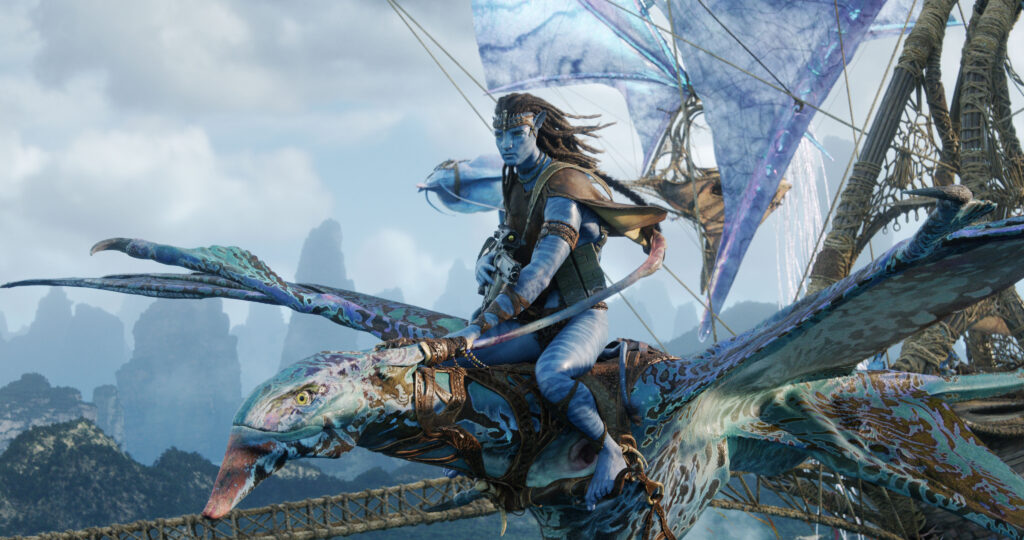
Fire and Ash is visually astonishing. Well, that one’s no longer a surprise. We’ve seen how gorgeous Avatar and Avatar: The Way of Water were, so one would expect nothing less in terms of imagery.
The addition of another side of Pandora where the Ash people live made the exoplanet feel more dangerous. One good thing about the movie is that these environments are more than passive backgrounds. They are vital elements that influence how scenes unfold, making the setting an active force within the story.
This is cinematic world-building at its most immersive.

More than spectacle, Avatar: Fire and Ash has an emotional weight that will connect with audiences. While these feelings are quite familiar mainly because we are seeing the characters’ responses to events in the last movie, they carry enough heft that will take audiences into the same emotional journey.
The story leans heavily into themes of loss, grief, and survival.
The development of each character added more layer to the story. They are more guarded, more burdened by past decisions. Haunted by the consequences of their actions, each character has become more complex. Cameron allowed these emotional threads to unfold gradually.
The film’s themes feel sharper and more urgent than in previous installments: environmental exploitation, misuse and abuse of power, convention versus innovation, and pacifism versus active defiance. The film also avoids simple moral divides, which is evident in the way these characters make their choices.
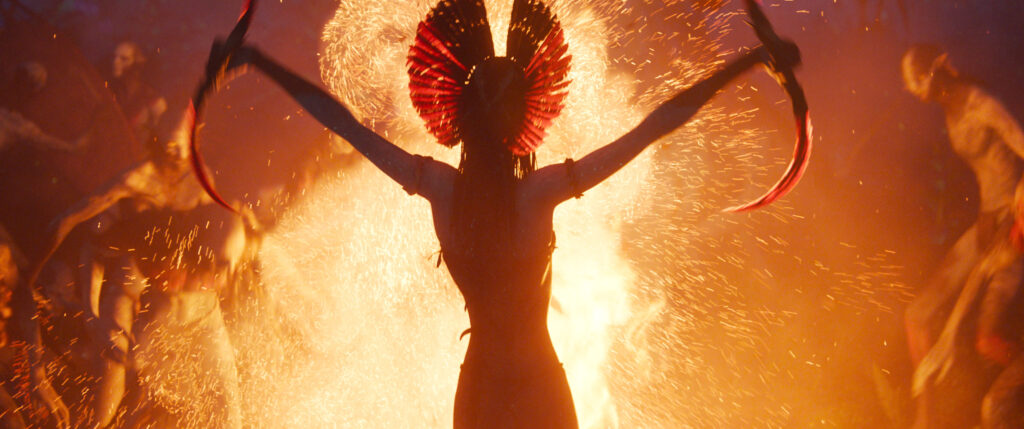
Despite its lengthy runtime, Fire and Ash managed to use every minute to tell the story in the most effective way possible. It took its time to establish the atmosphere, emotional context, and conflict which helped allow the audiences to experience Pandora rather than simply watch it.
That said, the film is not entirely flawless. Some may feel that certain narrative beats echo earlier films, which may feel predictable to longtime fans. Additionally, while several new characters make strong impressions, not all are given equal depth, suggesting that future installments may further explore their roles.
Even with these, Avatar: Fire and Ash stands as the franchise’s most confident and cohesive chapter to date. The seamless blend of technical innovation with emotional storytelling resulted in solid output.
Ultimately, Fire and Ash perfectly captures the magic of movies. It truly is bigger and better.
Watch the trailer here: